Preparing for a blog was a trip so far. So many topics, but which one to lead? Many of the ideas I came up with are more advanced, but I wanted to start with something a little more fundamental. And it hit me. Allow me to answer one of my most-asked questions: What are the benefits of brushing my dog’s coat? Put simply, there are many, for human and canine alike!
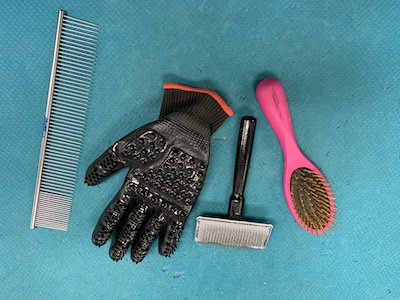
One common problem among dog owners is shedding, especially around the equinox. Dogs are equipped to produce undercoat which acts as insulation against the elements, including both heat and cold! It is constantly being replaced in order to function properly. Seasonal shedding occurs when daylight begins to shift; shorter days result in thicker undercoat, and longer days result in lighter undercoat. You may have already noticed your dog seems fluffier during the winter months. It’s to keep insulated during the time when sunlight is more scarce. Brushing out dead undercoat, especially during times of seasonal shedding, will help your dog grow their own proper protection.
Another common problem is matting. Some dogs have coat that seems to grow continuously. Hair is naturally subject to breakage, as it is the first defense against the dog’s environment. Dust, dirt, twigs, burrs, etc. can easily become trapped in long hairs, causing tangles and eventually mats. Also, hair that becomes long eventually tangles around itself without proper maintenance. Brushing keeps the hairs separated from each other while removing environmental debris.
For some dogs, both shedding and matting are problematic. Undercoat sheds and may become trapped in the longer guard hairs, resulting in matting. It is important to stay on top of heavy seasonal shedding to prevent undercoat from becoming matted, creating more trouble.
A dog’s coat is vital to protecting their skin from nature. However, the coat can also hide potential problems from their owners. When you brush your dog’s coat, it must be done all the way down to the skin. While the hairs are being tended to, this is an opportunity to check for any signs of distress, illness, and other irregularities with your dog’s skin. Are there any new lumps or bumps? Warts? Parasites? Hot spots or scrapes? Brushing can help you find these before they become too problematic.
For all dogs, self-brushing is impossible. Since they are unable to brush themselves (dewclaws don’t oppose!), they need someone with a thumb who is capable of picking up and operating objects… us! Good quality time can be spent brushing your dog. It’s an activity that lets them know you care, is associated with good feelings, and can even help you bond! Below is my suggested list of the minimum amount per week that each coat type needs brushed, along with the proper tool. Note: hairless and corded types are omitted, as I am currently on a mission to learn more about them myself!
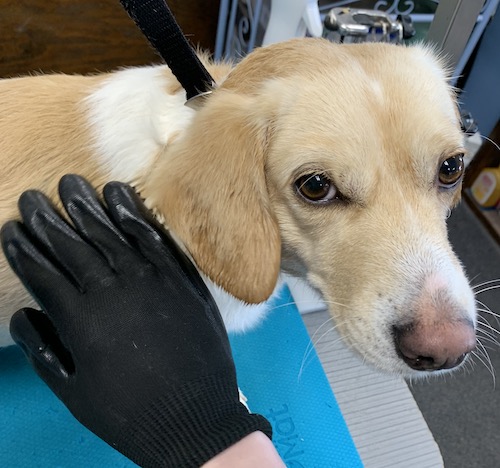
- Short – Every few days with a hound glove
- Smooth – Every few days with a hound glove, slicker during heavy shedding
- Medium smooth – Weekly with a slicker
- Nordic – Weekly with a slicker
- Rough Nordic – Every other day with a slicker
- Rough – Every two days with a slicker
- Broken – Every two days with a slicker or hound glove, depending upon length
- Tight wire – Every two days with a slicker
- Scruffy wire – every two days with a slicker
- Sporting – Every other day with a slicker or pin brush, depending upon length
- Medium long – Every other day with a slicker
- Tight curly – every day with a slicker
- Loose curly – every day with a slicker, especially after heavy activity
- Rough curly – every day with a slicker
- Drop – every day with a slicker, especially after heavy activity
- Sporting saddle – Every day twice with a slicker, especially after heavy activity, hound glove for saddle back
Let’s face it though: brushing time can be very scary for some dogs! Maybe they weren’t trained to accept handling as puppies, or they had a bad experience with an improper grooming tool in the past. Which ever the dog’s reason may be, it’s important for their overall health and well-being to be brushed as needed, and with the proper tool according to their coat type. Do they just not like holding still for so long? Keep the sessions short and fun. Was a tool improperly utilized in the past? Make sure your tool is appropriate for your dog’s size, coat type, and tolerance levels. Slicker brushes come in a wide range of stiffness and flexibility, going from folding and forgiving to completely rigid. A good slicker will be comfortable for your hand, your dog, and will glide through the coat.
Here are a few more pro-tips for a better brushing experience!
- For pin brushes and hound gloves, it is OK to take longer brushing strokes, as the pins will massage the skin. When using a slicker brush, a pat-and-pull method works best. Long strokes may irritate the skin.
- Mist the coat lightly with a grooming spray, anti-static spray, or even distilled water. Coat is easier to work with and is less susceptible to breakage when slightly dampened. A small amount is all that is needed. Try it on your own hair – you’ll be amazed at the difference!
- One of the most important things is to brush the coat all the way down to the skin. If your dog’s coat is longer, don’t be afraid to lift it up and check all the natural layers for signs of tangling and shedding! Only brushing the top hairs may lead to layers of matting below.
- Does your dog have a tender spot? Check how much pressure you are applying with the tool, keep the session shorter, and make it worth their while with a special treat.
- All coat types benefit from a comb at the finish. The comb is the perfectionist’s best friend; it will allow you to check for excess undercoat, find any pesky matting, and will leave the coat looking freshly groomed.
For a visual aid, check out the Live video I made on the Bath to Bows LLC Facebook page! While it was created during the pandemic lockdown, it is a good guide, especially for how to effectively use a slicker brush.
Any brushing questions? Fire away! Happy bonding with your dog through coat care!
 Bath to Bows LLC